When anxiety shows up, it rarely asks for permission. One moment you’re fine, and the next your chest feels tight, your thoughts are racing, and your breath has become short and shallow. I often remind clients that anxiety doesn’t start in the mind—it starts in the body. And one of the most effective ways to interrupt that spiral is through your breath.
Box breathing is a simple, structured breathwork practice that helps bring your nervous system back into balance. It doesn’t require a quiet room, special equipment, or years of meditation experience. It meets you exactly where you are.
A Moment From My Own Life
I remember sitting in my car one afternoon before walking into a meeting that I was dreading. My heart was racing, my shoulders were nearly touching my ears, and my mind was already rehearsing everything that could go wrong. Instead of pushing through, I stayed seated, closed my eyes, and practiced four slow rounds of box breathing.
Nothing about the meeting changed—but I did. My body softened. My breath slowed. I walked in feeling steadier and more present. That moment reminded me that calm isn’t something we find later; it’s something we practice now.
What Box Breathing Is (and Why It Works)
Box breathing—sometimes called square breathing—is a rhythmic breathing pattern where each phase of the breath is the same length. You inhale through your nose, hold, exhale, and pause, then repeat. It is usually done for a slow count of four.
This even rhythm sends a powerful signal to your nervous system: you are safe. When anxiety spikes, your breathing often becomes fast and shallow, reinforcing a stress response. Box breathing gently reverses that pattern.
The Four-Part Breath Patterns
| Inhale slowly through your nose | 4 counts |
| Hold the breath gently | 4 counts |
| Exhale slowly through your mouth or nose | 4 counts |
| Pause before the next inhale | 4 counts |
How Box Breathing Helps Ease Anxiety
It Calms the Nervous System
Slow, controlled breathing activates the parasympathetic nervous system—often called the “rest and digest” response. This is the part of your nervous system that helps slow your heart rate, relax muscles, and quiet racing thoughts.
It Reduces Physical Arousal
When your breath slows, your body follows. Research shows that breathwork practices like box breathing reduce respiratory rate and help the body shift out of fight-or-flight mode.
It Improves Mood in the Moment
Many people notice they feel calmer and more emotionally balanced after just a few rounds. Even brief practices can reduce anxiety and increase positive mood.
It Gives the Mind Something Steady to Focus On
Counting the breath provides a gentle anchor. Instead of trying to “clear your mind,” you simply follow a rhythm—one breath at a time.
When to Use Box Breathing in Daily Life
One of the reasons I love box breathing is its flexibility. You can use it:
• Before a difficult conversation
• During a sudden wave of anxiety
• After reading an upsetting message
• While sitting in traffic
• Before bed to unwind
• When your thoughts feel scattered or overwhelmed
You don’t need to wait for anxiety to show up. Practicing during calm moments trains your body to respond more smoothly when stress does arise.
A Gentle Reminder About Safety
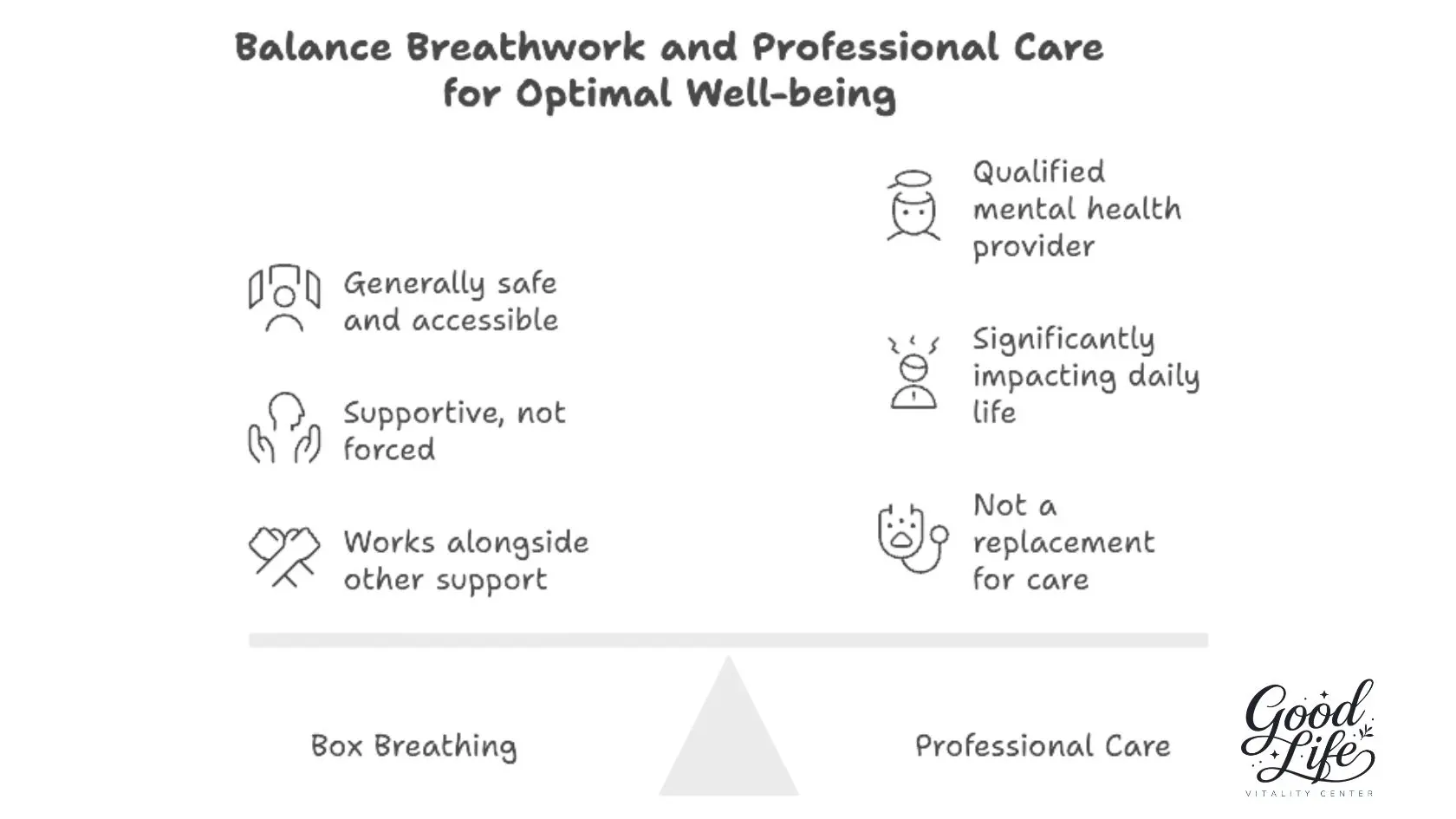
Box breathing is generally safe and accessible. If you ever feel lightheaded, dizzy, or strained, stop and return to your natural breath. This practice should feel supportive, not forced.
Breathwork is a powerful tool—but it’s not a replacement for professional care. If anxiety is significantly impacting your daily life, reaching out to a qualified mental health provider is an important step. Breathwork works beautifully alongsideother forms of support.
A Gentle Invitation
If this practice resonates with you, I’d love to guide you further. You’re welcome to join me for a 1:1 breathwork session or come breathe in community during one of my classes or workshops. Together, we’ll explore simple, accessible techniques that support your calm, your clarity, and your everyday well-being.
References
Box Breathing for Anxiety FAQ
How does box breathing help with anxiety?
Anxiety often causes rapid, shallow breathing, which signals danger to the brain and keeps the stress response active. Box breathing slows the breath and introduces brief pauses, which help activate the parasympathetic nervous system, the part responsible for rest and recovery. By changing the breath, you change the message your body is sending to your brain. Over time, this can reduce the intensity and frequency of anxious responses.
How long does it take for box breathing to work?
Many people notice a shift within the first one to three minutes. Physical sensations like a racing heart, tight chest, or shallow breathing often begin to ease after just a few rounds. While box breathing may not eliminate anxiety instantly, it frequently reduces its intensity enough to help you feel more grounded and in control in the moment.
Can box breathing stop a panic attack?
Box breathing may not completely stop a panic attack once it is fully underway, but it can significantly reduce its intensity and duration. When practiced early, at the first signs of panic, it can help prevent escalation. The steady rhythm gives your nervous system something consistent to follow, which can interrupt the panic cycle and help your body settle more quickly.
What if four counts feels too long?
Four counts is only a guideline. If it feels uncomfortable, shorten the count to three or even two seconds. The most important factor is that the breath feels gentle and steady, not forced. As your comfort grows, you may naturally lengthen the count over time.
Can I do box breathing while sitting or standing?
Yes. Box breathing can be practiced sitting, standing, or lying down. This flexibility makes it especially useful in daily life – at work, in your car, or before a conversation. Good posture helps, but perfection is not required.
Does box breathing help with stress as well as anxiety?
Yes. Stress and anxiety both activate the nervous system in similar ways. Box breathing helps slow physiological arousal, reduce muscle tension, and support emotional regulation, making it effective for everyday stress as well as anxiety spikes.
Can box breathing help me sleep better?
Absolutely. Practicing before bed helps your body unwind and prepares your mind for rest.
Can box breathing help me sleep?
Box breathing can support sleep by calming the nervous system and slowing racing thoughts before bedtime. While some people prefer longer exhales for sleep, box breathing is a helpful option for easing nighttime stress or anxiety and preparing the body for rest.
Is box breathing a form of meditation?
Box breathing can function as a form of meditation, but it is more structured than traditional mindfulness practices. Instead of observing thoughts, you focus on counting the breath. This makes it especially helpful for people who find open-ended meditation challenging.
What should I focus on while box breathing?
You can focus on counting, the sensation of air moving in and out, or visualizing a square. If your mind wanders, gently return your attention to the breath without judgment. The practice is about consistency, not mental perfection.